Mowing your lawn in spring

Mowing your lawnMowing is the most important maintenance operation for any lawn: without it you would not have a lawn. It is also the operation that makes most demands in terms of time and effort. However, the time and efforts required vary with the seasons. In warmer months, regular frequent mowing is required but in winter little or none. This post provides advice for mowing in the spring.

Before the first cut in spring, it is important to check the lawn and the mower. Starting with the lawn, there may be debris that should be removed prior to mowing. During the winter, it is likely that twigs and small branches have accumulated. Also, other rubbish may have blown in. It will be best to spend a little time clearing this prior to making the first cut. Be wary of objects that could damage or foul the mower. This could include twigs and small branches but particularly stones or pebbles. These can become a problem where a path borders the lawn and they get displaced on to the grass. Move them back to where they belong.

Having cleared the lawn and checked that the mower is in good order with sharp blades it is time to start cutting the grass. In the UK the timing of the first cut usually falls in March, however, this should be judged by the behaviour of the lawn and not just the time of the year. This year in particular has been much later than usual. If the grass is actively growing, it is time to start mowing.

The frequency of cutting should also be judged by rates of growth. The faster it is growing, the more frequently it will need mowing. In March, you may get away with once every two weeks but in April or May the required frequency is more likely to be weekly. In judging when and how frequently to cut, we would recommend that you never remove more than a third of the grass height in any one cut. It is important that you adjust your mower to keep within this rule in the spring. In doing this, it is likely that the mower will need to be set to cut at a higher height than the normal summer settings. Also, try to stay within this rule when you lower the cutting height. When you do this and the grass is growing quickly, you may need to increase the frequency of mowing to stay within the rule. Don’t worry about cutting off less than a third of the growth. It is unlikely that you will damage your lawn from cutting it too often but highly likely that damage will occur from infrequent severe cutting (like many other things, a little and often is best). When you do lower the cutting height, do it gradually and cut the lawn at least three times before changing the height again.

Finally, mowing should not be seen as a chore. It can be good for you as well as the lawn. Regular gentle exercise, like mowing, helps keep you fit and healthy!

For further advice visit our spring lawn care page

Posted in Lawn Care | Tagged , , | Leave a comment

March Maintenance: Welcome in Spring

rolawnThis winter has presented a particularly harsh time for our gardens. A combination of the freezing temperatures, snow fall and heavy rain will no doubt have left your garden looking a little worse for wear. Spring has been a little reticent to show itself this year, but make the most of any early sunshine and brighter days, grab your gloves and brave the weather to make a start on spring maintenance jobs. When temperatures return to normal, there will no doubt be a sudden burst of growth, so try to get on top of things now.

Tidy Up

Remove any existing weeds from beds and borders and keep an eye out for more over the coming weeks. Spring presents ideal conditions for the growth of weeds, so by starting early, you have a much higher chance of getting the upper hand in this never-ending battle.

Cut back perennials which have been left over winter. Remember that you’re making way for new growth, so even if they still look attractive, don’t be afraid to cut stems back to ensure your garden remains fresh. You may also wish to divide herbaceous perennials in order to provide them with more room, as well as fresh compost for a more fertile environment for them to prosper in.

Prepare Plant Beds

If you haven’t already begun preparing your beds, you may wish to begin this process sooner rather than later. Both beds and planters will require fresh, nutrient-rich compost for an optimum growing environment, whilst old compost from planters can be cast over beds to improve the quality of the existing soil.

Once you’ve removed any dead leaves and weeds and forked over the soil, you can apply a couple inches of mulch to assist your garden throughout the spring and summer and save yourself having to carry out extra work. Mulching helps to condition the soil whilst also suppressing weed growth and providing essential insulation during particularly harsh conditions. It also reduces evaporation, saving on watering. Mulch will offer your garden some much-needed protection whatever the weather throws at us.

Lawns

March is usually the time to give your lawn some much needed tender loving care, should the weather allow it. After some harsh climatic conditions, take care if the lawn is frosty or waterlogged and if necessary leave it to recover for a little longer before starting your spring maintenance.

If on the other hand you’re beginning to notice signs of fresh growth, then it’s time to give your lawn its first cut, but avoid mowing if a frost is forecast or the ground is too wet. Raise the blades of your lawnmower to ensure the cut remains light and removes no more than a third of the grass leaf. Lawn edges can also be tidied and recut as required with the use of a half-moon lawn edging iron.

Worm casts can cause havoc on lawns during winter. A stiff brush should be all that’s needed to disperse them during dry periods. Avoid redistribution of worm casts during wet conditions as this will often make the situation much worse. On dry days you can gently brush the worm casts aside to avoid leaving muddy smears on the lawn.

Once temperatures begin to rise and the grass starts to grow apply a spring feed.

Fresh turf can be laid if it’s required for new lawns or to repair damaged areas, although much like mowing an existing lawn, it’s best to avoid doing this during especially frosty periods or if the soil is still too wet and unworkable.

From here on in you will notice your attention being drawn to your garden much more than in previous months, so by getting prepared in March, you beat the rush of weeds and heavy maintenance that can be required in mid to late spring.

Posted in Gardening, Lawn Care, Mulch | Tagged , | Leave a comment

Shaded Lawn Turf Key Maintenance Advice

Even with all the best advice in the world, growing a turf lawn can be problematic depending on one very important factor – shade.

Growing lawn turf in the shade is one area in which Rolawn is regularly asked for advice from customers. As such it makes sense to understand how shade affects successful lawn development and the key maintenance points to help deal with this issue.

Science

Photosynthesis is the natural chemical reaction through which a plant turns sunlight into plant food. The key to the problem of shaded turf is obvious – with less sunlight, the ability of plants to generate the food they need to grow strongly diminishes and therefore additional help is required by the gardener.

Situation

Of course, the most obvious method to prevent unwanted shade on your turf is to ensure that its location is away from objects that will cause problems – however we appreciate that this is often easier said than done.

If you do have the opportunity to lay a new turf lawn wherever you wish, then where possible, you should avoid laying your lawn too close to buildings and other large structures as well as away from large trees. Not only do big trees generate large shady areas and leaf fall, which all add-up to additional maintenance for the lawn gardener, they consume great quantities of water, which, in hot dry summers, can drain the soil of available water for your turf.

Walking

Avoid walking unnecessarily on shaded areas. Grass blades in the shade require as much help as they can get to develop into a strong lawn and the additional wear and tear from unnecessary walking in these areas will make their job much harder.

Mowing

Never cut your shaded lawn turf by more than a quarter of the total grass blade length. This way you’ll be protecting the healthy green part of each blade which will encourage future growth and strength.

Scarification

It’s important to give shaded grass all the help it can get and this means removing competitors from its path. Moss and other unwanted plant growth can choke a lawn if it’s not dealt with properly. Scarification is the name given to the technique of removing moss and thatch (dead plant matter) that exists between grass blades using a fine tined rake. It allows additional room for the grass to grow densely. There are times of the year when scarification is not desirable however, because it can lead to the gaps being filled by further unwanted weeds. Spring and Autumn are usually considered the best time to scarify in conjunction with top-dressing and seeding where necessary.

For further information visit Rolawn’s Shaded Lawns Advice pages.

Posted in Lawn Care, Lawn Turf, Turf | Tagged , | Leave a comment

Lawn turf – dealing with worm casts & deterring worm activity

Worms are beneficial in the garden as their burrowing activities improve the aeration and drainage of the soil. They also improve the nutrient content of lawns and turf by pulling leaves and other organic matter into their tunnels, passing it through their digestive system, in turn delivering a nice compost. However in spring and autumn when the soil is warm and moist, certain species of earthworm can be the scourge of the lawn turf owner, depositing their muddy casts on the lawn surface. If casts are smeared onto a lawn whilst still moist, these muddy casts can ruin the visual appeal of turf. Worm casts may also contain weed seeds. The bare patch that a smeared cast creates is an ideal space for these seeds and other air borne weed seeds to germinate.

Turf

Dealing with worm casts

Avoid mowing or walking on casts whilst moist, as this will smear the casts into the lawn surface. Allow the casts to dry out when they will become much lighter brown in colour and crumble when squashed between thumb and finger. The casts can then be easily flicked away from the surface using a besom broom or an upturned wire rake, leaving only a slight blemish on the lawn turf rather than a large smear.

Deterring worm activity

Although deterring worm activity will reduce the positive effects that they provide, in some severe cases this can be a necessary sacrifice. There are a number of ways in which worms can be deterred; the easiest solution is to reduce the amount of food available for them. This is best done by reducing the amount of decaying organic material in the lawn surface through removal of leaf litter in autumn, the collection and removal of grass clippings throughout the growing season and a programme of regular scarification.

It is also possible to alter the soil characteristics to create conditions that they dislike. Earthworms seem to be discouraged from lawns with a high sand content, probably due to the lower moisture content and abrasiveness of the sand particles. Therefore applying top dressing with a high sand content is one option. Earthworms also appear to dislike soil with a low pH and so the use of acidifying materials in fertilisers and iron sulphate can reduce casting problems. It is worthwhile to note that there are no longer any lumbricides approved for use on garden lawns.

To sum up earthworms are helpful in keeping the soil healthy, however at certain times of the year in extreme cases their presence can affect the appearance of the lawn. This can be dealt with if necessary with a little time and effort.

Find further autumn lawn care advice.

Posted in Lawn Care, Lawn Turf, Turf | Tagged , , , | Leave a comment

How To Protect Your Lawn Turf Against Animal Urine

We all love our dogs, but not when they destroy our turf. Animal urine, especially from dogs, is one of the leading problems all lawn owners face. The concentrated nitrogen can burn lawn turf, which leads to those all-too-familiar brown patches that annoy us gardener’s so much. However, there are a number of ways to handle this problem. Some of the solutions involve training the animal in question and some of them are turf specific.

Nitrogen ‘burns’ and dog training

Let’s start with the animals. First, it’s important to understand that it’s not the pH of the animal’s urine that causes burns. This is a widely held misconception. The problem is the nitrogen present in the urine, not its acidity. Plant roots wither and die when exposed to high levels of nitrogen.

Sometimes, the urine from wild animals such as rabbits, hares and foxes may find their way onto your lawn and cause your turf problems in the same way that cats and dogs can. Unfortunately it is harder to control such animals but there are things that can be done to prevent or remedy urine from dogs and cats.

You should try to train your dog to ‘go’ in one place by planting ground covering plants or spreading mulch in that area – a pee post can work well for this. Pee posts are treated with pheromones to attract the dogs, encouraging them to use them for their ‘business’. You can also use motion-activated sprinklers in both the front and back gardens to help keep neighbourhood dogs and any other wandering animals such as cats away from your lawn turf.

Turf solutions

Now let’s look at your turf. The first thing you could try is to improve your soil quality. Make sure you have adequate drainage so that urine will sink into the soil beneath the roots of your lawn turf, thus reducing the severity of the burns. By washing the area down with water (one way you can do this is by applying gypsum to the water to neutralise the nitrogen) the nitrogen can be diluted and prevent it from burning your lawn turf. A lot of water must be used, so this solution really only works for spot treatments.

Finally, you might want to consider changing your lawn turf to a form of grass that is less prone to burning. Some types of grass are more sensitive to nitrogen than others. Fescue turf is the most resistant to burning, but perennial ryegrass also has a fairly high level of resistance. This is a fairly drastic step, but it is one way to keep your lawn healthy despite the presence of animals in your garden.

Posted in Buy Turf, Lawn Turf, Turf | Tagged , , , | Leave a comment

Springtime for Bark Mulching

As with lawn turf care, spring is the time of year when the garden’s beds and borders need some serious attention in order to prepare them for the onslaught of green growth, flowering plants and of course – protection against the dreaded weeds.

Weeds are easily forgotten over the colder months, but it is incredible how nature springs to life as soon as the temperatures increase and the days get longer and lighter. Mulching is one way to help prevent weeding becoming a laborious chore throughout the rest of the summer as well as helping with water retention and improving the organic content of the soil.

There are several materials that can be used as mulch and most are relatively cheap. If you maintain a compost heap as all serious gardeners should try to do, then you’ll have a good supply of mulching material that is high in well rotted rich organic matter. Alternatively, you can buy bags of peat-free compost to use as mulch.

Mulching can also be performed using bark chippings which also have the benefit of providing uniformity in beds and borders and giving an ornamental quality to any garden. Bark mulch has all the benefits of compost such as water retention, weed growth prevention as well as providing plant root insulation during colder periods.

When using bark mulch, be careful not allow the chippings to cover too much of the plants stems otherwise there can be a danger of rotting. An ideal depth for bark mulch is around 5cm, which, when being applied specifically for weed prevention, is to ensure that no light can reach the seeds which would otherwise allow them to germinate. In order to make sure that bark mulch provides effective weed growth protection, gardeners should ensure that the soil is free from weed growth before covering with the mulch.

Posted in Bark, Bark Mulch, Mulch | Leave a comment

Turf Maintenance Following Winter

The warm weather has been sprung upon us as spring time has finally arrived. For many, winter has been very cold and the early snow and persistent cold and wet weather will have undoubtedly led to garden turf being affected to some degree.

However, if you’ve always taken care of your turf, then the likelihood is that it will start growing strongly as soon as the sun begins to warm the ground and photosynthesis kicks in once more with abandon. There are a few things that you can do at this time of year to make your turf grow more efficiently and which will also protect your lawn and your lawn mower from unnecessary damage.

The first cut of a lawn during the start of the new growing season is a joy to behold as it sets out the gardening stall for the forthcoming summer months. You must make sure however that the turf is free from any winter debris such as twigs, fallen branches, leaves and other decaying organic matter, as well as stones, pebbles or slate chippings. The latter is often quite a common problem for those whose turf borders with a pathway or drive which has been overlaid with decorative aggregates.

You should also ensure that your lawn mower is up to the job. Remember, like a car that has been sat in a garage without having been started for several months, your mower will need a little care and attention before it is taken out to work. Check any parts that need oiling, check for rust and ensure that any electrical or fuel connections are in good condition. Most importantly for your turf, ensure that the blades remain sharp and adjust the height to ensure a good first and subsequent cuts. It’s generally recommended not to cut more than one third of your grass height at any one time, especially during the spring.

Cutting your turf with care and thought will ensure that it remains strong and healthy and will provide you with a beautiful lawn throughout the summer.

Posted in Buy Turf, Lawn Care, Lawn Turf | Leave a comment

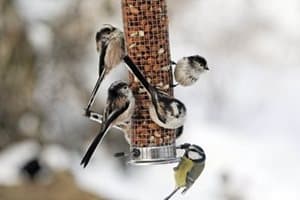
Birds In Your Garden Over Winter

Most Gardeners will be aware that their attractive plants, garden turf lawns, shrubs and vegetables all provide a haven for insects, butterflies, birds and bees during the spring, summer and autumn months. With an abundance of lush green leaves, fruits, berries and seeds, it can come as a bit of a shock to wildlife when a cold, hard winter comes along and depletes nature’s larder. And as wildlife is an integral part of what makes a garden, what gardener would not want to play a part in encouraging it throughout the year?

For our native birds especially, for those that haven’t migrated to warmer climes during the winter at least, finding food becomes much harder. This is especially so when snow and ice prevents access to foods that lie underneath in beds, borders and garden turf. And without the natural flurry of insects that are prevalent throughout the warmer months of the year, birds can quite quickly go hungry.

Birds also rely heavily on other wildlife species that are attracted to a warm sunny garden, especially insects and grubs – but again, these themselves are fewer during winter. This is why it can be of great advantage to the gardener during the winter months to employ a bird feeder. Not only will this help the birds during their winter search for food, it will provide the gardener with the additional benefit of being able to watch the many varieties of birds as they come into the garden to feed – an added bonus when many plants, flowers, shrubs and trees lose their colourful leaves, petals and fruit.

Of course, as a gardener, you may rely on insect eating birds to help maintain your plants during the growing months and anything that you can do to encourage them to stay when the going gets tough, should enable you to reap the benefits later on as they recognise your garden as the land of plenty, whatever the weather.

There are many kinds of bird tables or bird feeding stations available to buy, or you could make your own. Further advice is available from the Royal Society for the Protection of Birds (RSPB).

Posted in Garden Wildlife, Gardening | Leave a comment

Rabbits – Not In My Garden Or On My Turf!

Wild rabbits can wreak havoc in your garden, munching on your flowers, bushes and veggies and can prove a nightmare for lawn care. Unfortunately they’re a tricky pest to get rid of – your tasty plants keep them coming back for more. There are lots of tricks you can try however, and we wish you the best of luck!

Trapping The Blighters

Not for the faint-hearted, rabbit traps work best in winter when food sources are scarce. Lure your rabbit into the trap with a tasty morsel and he’ll become stuck when the door springs closed behind him. You can either have rabbit pie for dinner (I said it wasn’t for the faint-hearted!) or release the poor bunny away from your garden. Bear in mind that if you release him, he might just come back!

Sonic Repeller

Like moles, rabbits don’t like noises in the garden, so investing in an electronic buzzing device could be money well spent. These can be installed in the garden and could prove to be an essential part of your vegetable and lawn care.

Alternative Food Sources

Rabbits come to your garden because of all the lovely cuisine on offer. If they found something yummy elsewhere they may stay away. Planting a favourite like clover on the outskirts of your garden could stop the hungry bunnies in their tracks!

Fencing – A Guaranteed Solution

The only tried and tested, successful way to keep rabbits out is to put up a fence. It should be at least 3 feet high and buried 6-8 inches into the ground to stop them digging underneath. It may look unsightly, but the weary gardener would rather spoil the view than let all her plants get eaten by greedy rabbits!

Posted in Lawn Care | Tagged , , | Leave a comment

Mole Invasion and Lawn care – Some Ways To Get Rid Of Moles

Moles are all very well when their hills scatter the grass verges at the roadside – they lend a picturesque feel to a rural lane – but when molehills start popping up all over your lawn and ruining the view, it means war. Lawn care can become twice as hard when moles are present.

Unfortunately, if you have a well-drained lawn with lots of lovely earthworms aerating the soil and doing other wormy things, you’re more susceptible to moles. Moles love to eat worms, and as they burrow through your lawn in search of this tantalising delicacy they leave behind a trail of destruction that includes fallen in tunnels and unsightly piles of earth making lawn care imperative.

Lawn Care – Getting Rid of the Blighters

Getting moles to leave your garden can be a tricky job. They’re territorial fellows and like nothing more than to stick around once they’ve found some prime real estate. If you do manage to remove one mole, there’s a good chance another will come along instead.

Don’t give up however – there are several ways to get rid of moles and you might need a mix of methods. Firstly, vibrations drive moles crazy, so try something as simple as installing a child’s windmill in your garden. If you’re into a bit of high-tech lawn care you can buy electronic buzzing devices from your local garden centre.

Trapping and flooding out moles are effective (if a little cruel) methods, but don’t be surprised if the moles come back. You may also drown baby moles so this isn’t a solution for the faint-hearted.

An organic, friendly way to discourage moles is to lace their holes with a garlic repellent like Rolawn Mole Repel. It stops them burrowing further and can curb your problem effectively.

Posted in Lawn Care | Tagged , | Leave a comment