Secure online checkout

Select a Free Delivery Date*

ISO 9001 Quality Management

Award-winning customer service

Damage to lawns caused by animals

Maintaining a healthy looking lawn can be more of a challenge if you share your garden with animals – whether they are your own pets or wild visitors.

We will look at some of the different ways animals can harm your lawn and steps you can take as a gardener to minimise damage and how you can repair your lawn when it has already occurred.

Animal Damage to Lawns: Causes, Prevention and Repair

If your lawn has suddenly developed holes, worn paths or brown patches, animals are often the cause. Dogs, foxes, badgers, squirrels and even hedgehogs can damage grass through digging, repeated traffic or urine scorch. The good news is that most animal damage is repairable. With the right approach to soil care, reseeding or turf replacement, your lawn can recover and become more resilient over time.

This guide explains how to identify common symptoms, prevent further damage, and restore a healthy, even lawn..

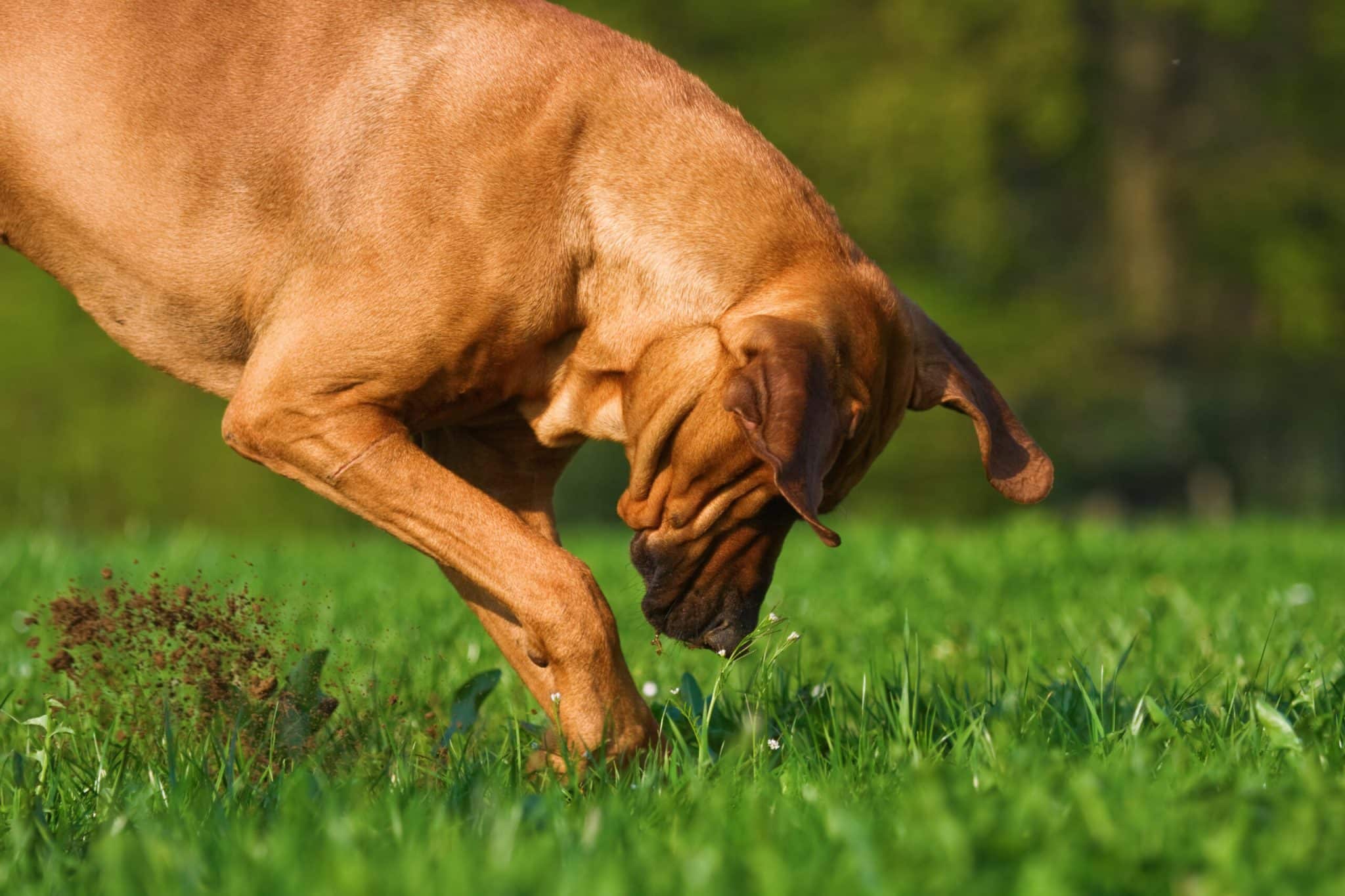
Dog digging the lawn and garden. How to repair your lawn

How do animals damage lawns?

Clearly, animals do not damage lawns intentionally. Most issues arise from natural behaviours:

  • Digging to hunt for grubs such as chafer larvae or leatherjackets
  • Scraping soil after toileting
  • Repeatedly walking the same route across the garden
  • Urinating in favourite spots

Understanding the cause helps you choose the right solution rather than applying a quick fix.

Holes and torn turf:  likely causes

If you are finding shallow scrapes or deeper holes in the lawn, common causes include:

  • Foxes and badgers are searching for chafer grubs or crane fly larvae
  • Dogs digging out of habit or boredom
  • Squirrels burying or retrieving food
  • Moles create tunnels and soil mounds
  • Hedgehogs leaving small, shallow feeding holes while searching for insects

Grub activity can weaken the grass roots, which makes the turf easier for larger animals to disturb. Chafer grubs and leatherjackets feed on roots beneath the surface, often going unnoticed until turf lifts easily.

How to repair digging damage

For minor surface scrapes:

  • Gently press lifted turf back into place
  • Water lightly to settle soil contact

For deeper holes:

  1. Rake displaced soil back into the cavity
  2. Firm the area level
  3. Overseed with a hard-wearing lawn seed such as Rolawn Medallion® Lawn Seed, or
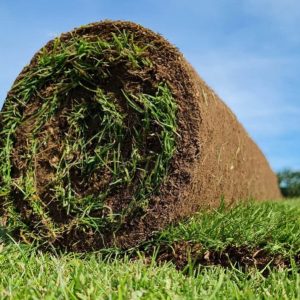
  4. Patch with fresh turf such as Rolawn Medallion Turf for a quicker result

Replacing turf gives an instant visual improvement, which many homeowners prefer in high-visibility areas.

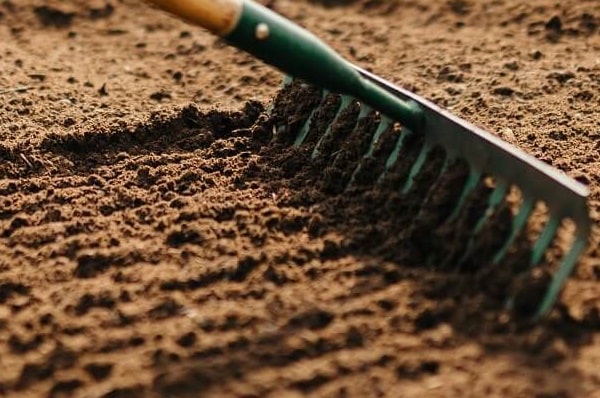
Raking topsoil - preparing to lay turf

Worn paths and thinning grass: is soil compaction the issue?

If grass is thinning along a regular route, such as along a fence line, soil compaction is likely. Repeated footfall reduces air space in the soil. When pore space decreases, roots struggle to access oxygen and drainage sl
Symptoms of compaction include:

  • Water sitting on the surface after rain
  • Grass that feels hard underfoot
  • Patchy, weak growth along pathways

How to relieve compaction

Shallow compaction caused by pets can usually be corrected through aeration:

  • Use a garden fork to create holes 75 to 100mm deep
  • Focus on affected areas rather than the whole lawn
  • Carry out aeration during spring or autumn when soil is moist

Aeration improves drainage and root development. Follow with a light topdressing and overseeding if thinning has already occurred.A healthy lawn, supported by regular feeding and mowing, will recover more effectively from occasional stress.

Brown patches from dog urine: what is happening?

You may see round brown patches with green rings in your lawn; this pattern is typical of urine scorch. Animal urine contains high levels of nitrogen. In small amounts this encourages growth. In concentrated areas, it can damage grass.You may notice:

  • Dark green, faster-growing patches on underfed lawns
  • Brown circular areas surrounded by darker green grass on well-fed lawns

The darker ring forms where nitrogen is diluted enough to stimulate growth without scorching.

How to prevent urine scorch

If the cause is your own dog, prevention is possible:

  • Water the area immediately after urination to dilute nitrogen
  • Encourage regular water intake
  • Train dogs to use a designated gravel or bark area

There are products marketed to alter urine composition. Results vary. Dilution with water remains the most reliable method.

Keeping your lawn evenly nourished with a balanced fertiliser helps minimise visible contrast between affected and unaffected areas.

How to repair brown patches quickly

For small, scorched patches:

  1. Rake out dead grass
  2. Lightly loosen the soil surface
  3. Apply a seed and topsoil mix
  4. Water thoroughly

Covering the area temporarily with a breathable covering can help retain warmth and moisture during germination.

For larger or highly visible areas, replacing the damaged section with fresh turf provides faster results and restores a uniform appearance.

If you regularly experience scorch, keeping a small supply of seed or turf to hand can make repairs straightforward.

Choosing the best turf or seed for gardens with pets

If your garden sees regular use from pets or children, durability matters.A lawn with a high percentage of perennial ryegrass offers good wear resistance while maintaining a domestic appearance. Rolawn Medallion Turf is grown with approximately 70% dwarf perennial ryegrass, making it suitable for family gardens.

For overseeding, using the same seed blend ensures colour and texture consistency.

In dry, coastal or free-draining soils, fescue blends may also be appropriate. Matching turf to soil and light conditions makes long-term care easier and reduces stress-related damage.

Seasonal approach to animal-related lawn issues

Spring and autumn are the best times for:

  • Aeration
  • Overseeding
  • Turf repairs

During these seasons we generally experiencethe moderate temperatures and natural moisture needed to support root establishment.

Summer repairs require more frequent watering. Winter is best reserved for planning and improving drainage rather than active reseeding..

FAQs

Why does my lawn have random holes overnight?

Foxes or badgers are often responsible. They dig for chafer grubs or leatherjackets beneath the surface. If turf lifts easily, check for root-feeding larvae.

Hedgehogs may create small, shallow holes while feeding on insects, but they rarely cause significant lawn damage. In many cases they are beneficial, as they feed on soil pests that can weaken grass roots. Minor disturbance can usually be levelled and overseeded if needed. 

This is usually dog urine scorch. Concentrated nitrogen kills the centre area, while diluted nitrogen encourages growth around the edge.

Yes, in many cases. Light scorch may recover naturally. More severe patches will need reseeding or turf replacement.

Watering affected areas immediately and training your dog to use a specific section of the garden can significantly reduce visible damage.

For small patches, reseeding is effective and economical. For larger or high-profile areas, replacing turf provides an instant improvement and consistent finish.

This may indicate soil compaction. Aerating the affected area improves drainage and root health.

In most UK gardens, foxes and badgers tend to cause the most visible damage. This is usually because they dig for chafer grubs and leatherjackets beneath the surface, which can result in larger holes and lifted sections of turf.

Dogs can also cause repeated localised damage through digging, worn patrol routes or urine scorch.

By contrast, hedgehogs and squirrels typically create smaller, shallow disturbances that are easy to level and repai
If damage is severe or recurring, it is often linked to an underlying grub population weakening the roots rather than the animal alone. Improving lawn health and addressing soil pests usually reduces the problem long term.

When to seek expert advice

Animal damage often looks worse than it is. In most cases, correcting soil structure, reseeding worn areas and maintaining consistent lawn care will restore a healthy appearance.

If you are unsure which turf or seed is best suited to your garden conditions, speaking to an experienced supplier early on can prevent unnecessary work later.
A well-prepared lawn, supported by the right turf choice and regular aftercare, will cope far better with everyday garden life, including pets and wildlife.

Lawn care reminders to your inbox

You can also sign up to our newsletter to receive free seasonal lawn care advice and reminders of essential maintenance, as well as general horticultural advice and special offers from Rolawn.

Important update: Temporary 6.5% surcharge effective 7 April 

At Rolawn, we are committed to maintaining the high standards of quality and service our customers expect, so we want to be open with our customers about a change that will affect pricing from Tuesday 7th April. 

This decision has been taken in response to disruption to energy supplies, which has led to significant increases in wholesale prices, affecting not only fuel and fertiliser but also costs throughout our wider supply chain. As a business that relies heavily on fuel for both transport and operations, these sustained cost pressures have become increasingly difficult to absorb.  

While we have worked hard to mitigate the impact, the scale and pace of recent price increases have now exceeded what we can sustain internally, and we therefore need to recover a proportion of these externally driven increases. 

From Tuesday 7th April, a temporary 6.5% surcharge will apply to all products.  

We know that any increase in price is frustrating, particularly at a time when many businesses and households are already feeling under pressure. That is why we want to be clear that this is not a decision we have made lightly, and not one we wanted to make. It has been introduced solely to help offset unavoidable cost inflation and allow us to continue delivering the quality, reliability and service standards associated with Rolawn. 

We will continue to monitor market conditions closely and will review this surcharge as soon as circumstances allow, providing reasonable notice of any changes. We recognise that any price increase is unwelcome, but this step is necessary to ensure the continuity and reliability of our operations during a period of ongoing uncertainty. 

We remain committed to providing the quality, reliability and service standards you expect from Rolawn, and we truly appreciate your understanding and continued support. 

If you have any questions, please contact our customer support team who will be happy to help.