The physical and mental health benefits of gardening are well known and covered in our previous blog posts, Coming up Roses – how gardening can help you thrive with your long-term health condition, Gardeneering – the new health and happiness hero and Gardening: A full body workout for the mind & body, but there’s an important social aspect that seems to be less well publicised.
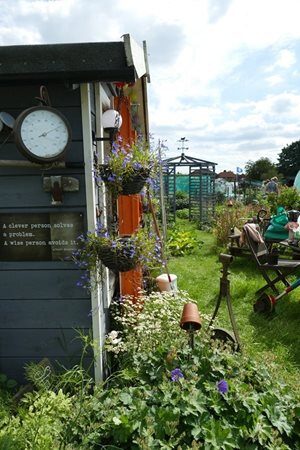
As an allotment-holder Emily has found herself entering a whole new community. There are all walks of life at her allotment, mostly on a similar wavelength – at least where gardening is concerned. It’s common for skills and experience to be shared in the group as the older generation happily pass on years of hints and tips.
The sharing extends to everything from seeds, plants and produce, to paint and chicken wire, as people offer spares to fellow allotment-holders via a ‘share table’.
The social side of keeping an allotment can be a lifeline and Emily witnesses the community spirit when tea, cake and a chat are shared on a daily basis. That’s quite apart from the organised social events open to everyone who keeps an allotment at the site, including bank holiday barbecues, a Christmas get together, summer evening beers and the annual show with its traditional gentle rivalry.
As a child, Emily spent time with her Dad pottering in the family veggie patch and isn’t alone in now experiencing a pull back to the simplicity and the satisfaction of this rewarding pastime.
A long-time supporter of the allotment system is Phil Gomersall, President of the National Allotment Society and Secretary of Victory Garden Allotments in Leeds. In 2018, he was awarded the British Empire Medal for services to Horticulture in Yorkshire and can often be seen around the country promoting the benefits of allotment renting so we asked him for his thoughts on the value of the allotment: “Allotments have always been a healthy recreational pastime, but they have been a real godsend for 1000s during the coronavirus pandemic. The benefits of working an allotment have really come to the fore.
“Perhaps now planners may heed what many in the community want and councils may start to fulfil their legal obligations to provide more allotments where there is demand.”
Of course, a veg plot doesn’t have to be on a formal allotment site. With the right planning, a productive plot can be established in the smallest of gardens, front gardens, a local park with the relevant permission or, with a bit of creativity and perhaps some upcycling, a planter can be made from almost anything and positioned on a balcony, roof terrace or even hung on a garage wall.
If you’re interested in learning more about allotments why not head over to The National Allotment Society website or apply for a plot on the Government website.
Author: Hannah McGouran, Rolawn
As Rolawn’s resident Copy and Digital Content Creator Hannah draws on her degree in Linguistics and Social Sciences, many years of marketing experience and a love of gardening, to make the world of turf, topsoil, barks and mulches accessible to the masses.