Secure online checkout

Select a Free Delivery Date*

ISO 9001 Quality Management

Award-winning customer service

How to manage ants and ant hills in lawns

Ants on a lawn can be a real nuisance. Ant nests and hills can disturb and smother grass plants, contributing to an uneven surface and yellowing from root damage.

Ants are very difficult to prevent entirely, but the damage they cause can be rectified with some routine lawn maintenance.

Ants in Lawns: Causes, Ant Hills and How to Control Them

If you are seeing small soil mounds or loose patches across your lawn, ants are usually the cause. In most cases, ants themselves do not harm grass directly. The issue comes from the nests and soil they bring to the surface, which can smother grass, create uneven areas, and affect the look and usability of your lawn.

The good news is that ant activity can be managed. With the right approach, you can reduce disruption while keeping your lawn healthy and stable.

Why do ants build nests in lawns?

Ants choose lawns because the soil offers the right balance of warmth, moisture, and ease of digging. Well-drained, sandy or light soils are especially attractive.

They build underground colonies and push excavated soil to the surface, forming small mounds known as ant hills.

Common reasons ants settle in lawns:

  • Soil is dry and easy to work with
  • The area is warm and exposed to sunlight
  • There is limited disturbance from regular lawn care
  • Nearby food sources such as insects or organic matter

In many gardens, ant activity increases during warm, dry periods when conditions are ideal for nesting.

Information & Advice - Ants in turf

Are ants bad for your lawn?

Ants are not always a problem. In fact, they are part of a healthy garden ecosystem. They help move soil, improve drainage, disperse seeds and feed on the larvae of other insects, some of which can be more damaging to lawns.

You can also think of light ant activity as a form of natural aeration. The issue is not usually the ants themselves, but the disturbance caused by their nests and surface mounds.

Issues caused by ants include:

  • Soil mounds smothering grass
  • Uneven surfaces that affect mowing
  • Loose soil leading to patchy growth
  • Yellowing where grass plants have been disturbed
  • Increased weed establishment in disturbed areas

In well-maintained lawns, these effects are usually manageable. Problems tend to develop when ant hills are left untreated, become widespread, or leave the surface uneven over time.

How to identify ant activity in lawns

You may notice:

  • Small, loose soil mounds scattered across the lawn
  • Fine soil appears on the surface after dry weather
  • Areas where the grass looks thin or disturbed
  • Increased activity during warm months

Ant hills are often more visible in short, closely mown lawns where the contrast between soil and grass is clearer.

How to deal with ant hills in your lawn

In many cases, control is straightforward and does not require drastic action. A holistic approach is usually best, managing ant activity and repairing surface damage rather than trying to remove ants completely.

1. Brush or rake away soil

For small or occasional ant hills, allow the soil to dry first, then gently brush or rake it back into the lawn. This prevents the loose soil from smothering the grass and helps keep the surface level.
This is especially useful in summer, when ants are more active and lawns are being mown more often. Removing loose soil before mowing also helps protect your mower and stops earth from being spread across the lawn surface.

2. Repair uneven areas

If ant activity has left areas of the lawn raised, sunken or uneven, these sections can often be patch repaired.

For areas up to around 2 metres, you can:

  •  Create an H-shaped incision in the turf 
  •  Peel back the turf carefully 
  •  Add topsoil if the level is too low, or remove soil if it is too high 
  •  Firm the soil down 
  •  Lay the turf back into place 
  •  Apply topdressing around the incision 

This helps restore a smoother surface without replacing the whole lawn.

3. Level the lawn with topdressing
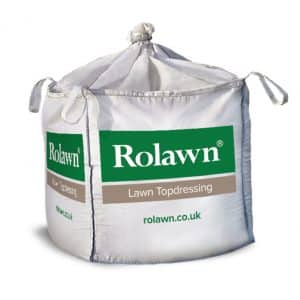
Where ant hills have caused minor surface unevenness, topdressingis one of the most practical ways to improve the lawn.
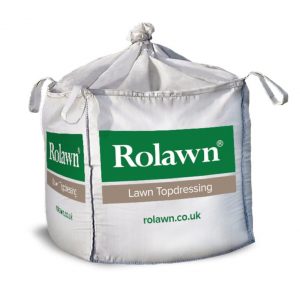
A suitable lawn topdressing can help even out shallow dips, improve the surface appearance and support the general health of the grass. It is especially useful after brushing away repeated ant hills or when repairing areas that have become thin or disturbed.

4. Maintain regular lawn care

A dense, healthy lawn is less inviting for ants to establish visible nests. Regular mowing at the correct height, feeding to maintain strong growth, and overseeding thin areas will all help improve coverage. Thicker grass gives ants less exposed soil to disturb and helps the lawn recover more quickly from surface activity.

5. Water during dry periods

Ants prefer dry, loose soil. Keeping the lawn evenly moist during dry spells can discourage nesting near the surface. Avoid overwatering, but aim for balanced soil moisture.

6.Keep your lawn clear

Ants often nest underneath objects that have been left out on lawns, such as tarpaulins, bricks or garden equipment and toys. These items create shelter and protection for their nest, regulating the temperature and retaining moisture. So keeping your lawn clear of objects that could create the ideal environment for an ant nest.

Should you use ant control products?

If the ant population is excessive and other methods have not worked, consider a non-chemical approach first.

Biological control
Ants can be controlled using a biological nematode treatment. The nematodes act as an irritant, encouraging ants to move away from their colonies.
These treatments are usually applied from April to October, when soil temperatures are warm enough for nematodes to be effective. Where ant levels are high, repeat applications may be needed to prevent ants from returning to the colony.

Physical control
Physically digging out and relocating an ant nest is possible, but it is time-consuming and difficult to do well. To be successful, you would need to remove an extensive area and ideally locate the queen.Avoid pouring substances such as ant powder, salt or boiling water onto your lawn. These can scorch the grass and may cause more damage than the ants themselves.
For a particularly bad infestation, where regular maintenance and non-chemical methods have failed, it is best to seek professional advice.

Chemical control
Chemical treatments are available, but they are not always necessary. They can also affect other wildlife, pets and children if used incorrectly, so they should not be the first option for most lawns. 

They may be useful when:

  • Ant activity is widespread
  • Soil mounds are affecting lawn use
  • Other methods have not reduced the problem

If you choose to use a product, follow the manufacturer’s guidance and apply it carefully to avoid affecting surrounding plants or wildlife.

In many cases, improving lawn health and managing the surface is enough.

Frequently Asked Questions

Do ants damage grass roots?

Ants do not usually damage grass roots directly. Most problems come from soil disturbance and surface mounds.

Warm, dry conditions make soil easier to dig, which encourages ants to build nests closer to the surface.

Yes. Brushing or raking them flat helps protect your mower and prevents soil from

Heavy rain can flatten mounds temporarily, but ants will often rebuild them once conditions dry out.

Improving lawn density, maintaining soil moisture, and reducing dry, loose soil will help limit future activity.

Some are designed for lawn use, but they should be used carefully and only when needed. Always follow product instructions.

Improving the lawn is usually the most effective long-term approach. A healthy lawn reduces visible ant activity naturally.

Ants can be frustrating, but in most lawns they are a manageable issue rather than a serious problem. With consistent care, most lawns recover well and remain even and usable.

If your lawn is thin, uneven, or struggling to recover, improving the soil and grass coverage will make the biggest difference. In some cases, replacing worn areas with high-quality turf provides a quicker and more consistent result.

If you are unsure how to approach the problem, getting expert advice early can help you avoid unnecessary work and keep your lawn in good condition over the long term.

Recommended products:

Lawn care reminders to your inbox

You can also sign up to our newsletter to receive free seasonal lawn care advice and reminders of essential maintenance, as well as general horticultural advice and special offers from Rolawn.

Important update: Temporary 6.5% surcharge effective 7 April 

At Rolawn, we are committed to maintaining the high standards of quality and service our customers expect, so we want to be open with our customers about a change that will affect pricing from Tuesday 7th April. 

This decision has been taken in response to disruption to energy supplies, which has led to significant increases in wholesale prices, affecting not only fuel and fertiliser but also costs throughout our wider supply chain. As a business that relies heavily on fuel for both transport and operations, these sustained cost pressures have become increasingly difficult to absorb.  

While we have worked hard to mitigate the impact, the scale and pace of recent price increases have now exceeded what we can sustain internally, and we therefore need to recover a proportion of these externally driven increases. 

From Tuesday 7th April, a temporary 6.5% surcharge will apply to all products.  

We know that any increase in price is frustrating, particularly at a time when many businesses and households are already feeling under pressure. That is why we want to be clear that this is not a decision we have made lightly, and not one we wanted to make. It has been introduced solely to help offset unavoidable cost inflation and allow us to continue delivering the quality, reliability and service standards associated with Rolawn. 

We will continue to monitor market conditions closely and will review this surcharge as soon as circumstances allow, providing reasonable notice of any changes. We recognise that any price increase is unwelcome, but this step is necessary to ensure the continuity and reliability of our operations during a period of ongoing uncertainty. 

We remain committed to providing the quality, reliability and service standards you expect from Rolawn, and we truly appreciate your understanding and continued support. 

If you have any questions, please contact our customer support team who will be happy to help.