How to lay lawn turf

To lay lawn turf successfully, you need good preparation, correct timing, and careful aftercare.

When turf is laid onto well-prepared soil and looked after properly in the first few weeks, it establishes quickly and develops into a strong, attractive lawn that lasts for years.

This guide explains how to plan your project, prepare the ground, lay turf correctly, and care for your new lawn with confidence.

Tools you will need

Before you start, make sure you have the right tools ready. This helps avoid delays once turf arrives.

Commonly required tools include:

  • Wheelbarrow
  • Rake
  • Spade or fork
  • Long knife or old hand saw
  • Garden hose and sprinkler
  • Timber planks for walking on laid turf

You may also need a turf cutter or rotovator if you are removing an existing lawn.

Step 1: Planning your new lawn

Good planning makes turf laying far easier. Before ordering turf, think about:

  • The shape and size of the lawn
  • How much turf and topsoil you need
  • Whether old turf or soil needs removing

Ground preparation should be completed before delivery so turf can be laid within recommended timeframes:

  • Spring and summer: lay immediately
  • Autumn and winter: lay within 24 hours

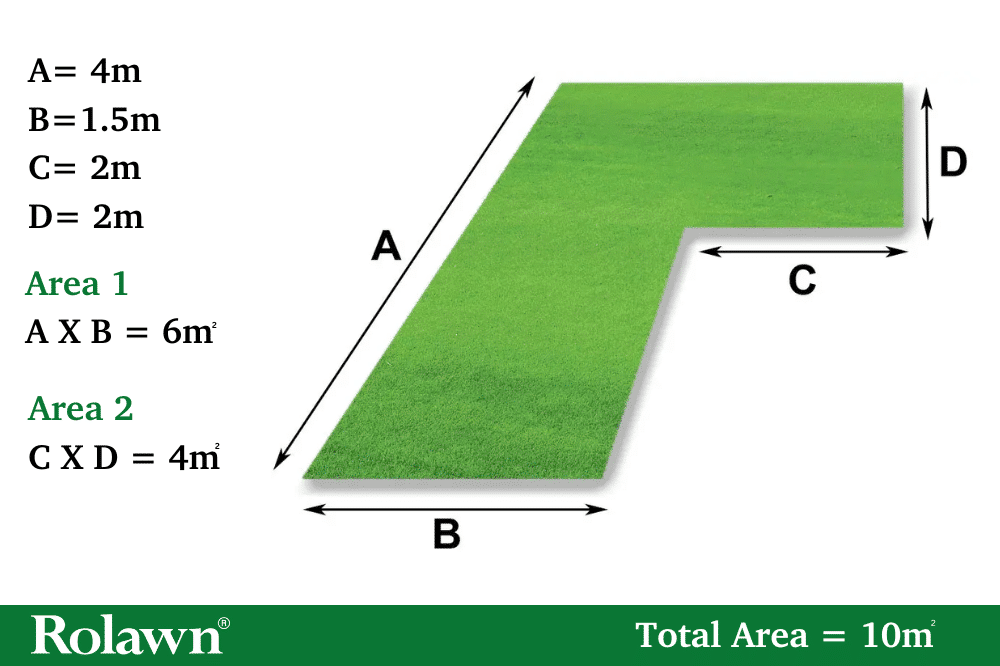
Using a turf calculator helps ensure you order the correct amount, with a small allowance for cutting and shaping.

Read our guides to learn how to measure your lawn & how to calculate topsoil requirements.

Rolawn graphic depicting how to calculate garden area

Step 2 : Preparing the ground

Professional turf growers focus on soil preparation first because even the best turf cannot perform well on poor ground.

Removing an existing Lawn

If you already have grass, it must be removed. This prevents weeds and allows the new turf to root properly.

Options include:

  • Lifting turf using a hired turf cutter, which allows old turf to be composted
  • Treating the area with a suitable non-selective weed killer, allowing time for it to work before preparation begins
Compost in gardeners hands

Checking the quality and depth of your soil

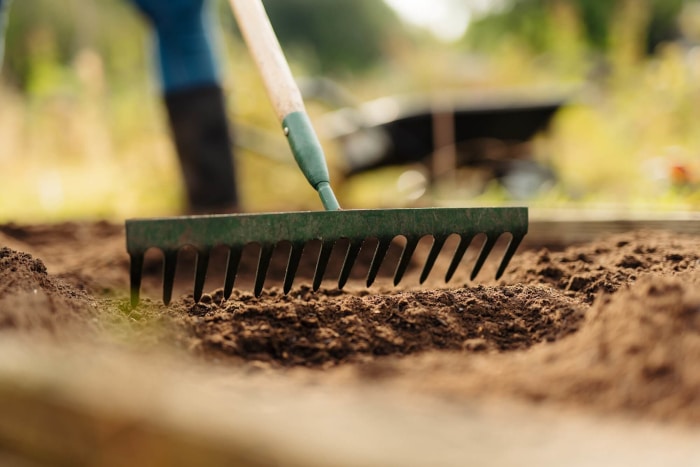
Aim for a minimum topsoil depth of 100mm, with 150mm preferred. The soil should be levelled and raked to a fine tilth.

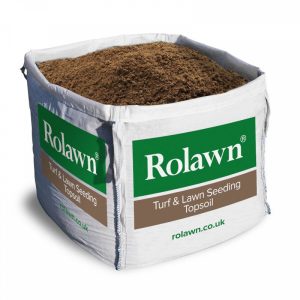
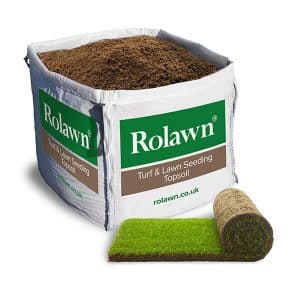
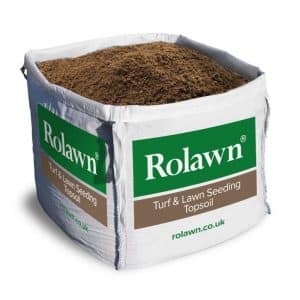
Rolawn Turf & Lawn Seeding Topsoil is designed specifically to provide a firm, level base for turf and is blended with GroRight® Lawn Establishment Fertiliser to support early root growth.

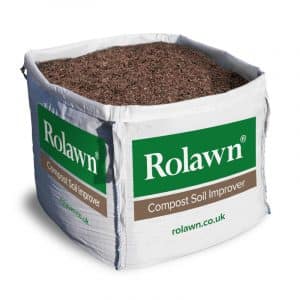
If your existing soil is reasonably good, a soil improver can be used instead to enhance structure and fertility.

Read our full guide on preparing to lay turf for more info.

Levelling of the ground

Levelling is one of the most important steps and worth taking time over.

A simple and effective approach is to walk slowly across the area. This helps you feel dips and high spots that are not always visible.

Key steps:

  • Dig over or rotovate to loosen the soil
  • Remove stones, debris, and perennial weeds
  • Lightly compact by walking over the area in two directions
  • Fill dips and break up compacted patches
  • Rake to a level, fine surface

Avoid using heavy rollers, as these can compact soil too much.

Topsoil being raked

Step 3: Laying the turf

Turf should be laid as soon as possible after delivery, as rolled turf can begin to warm up if left stacked for too long, which may affect quality.

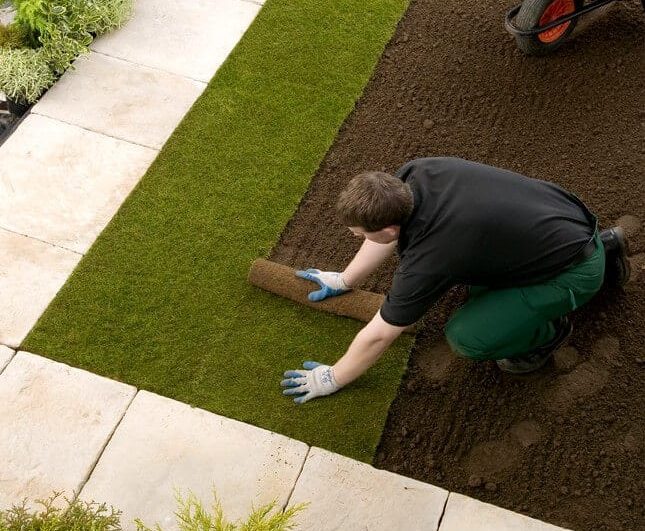
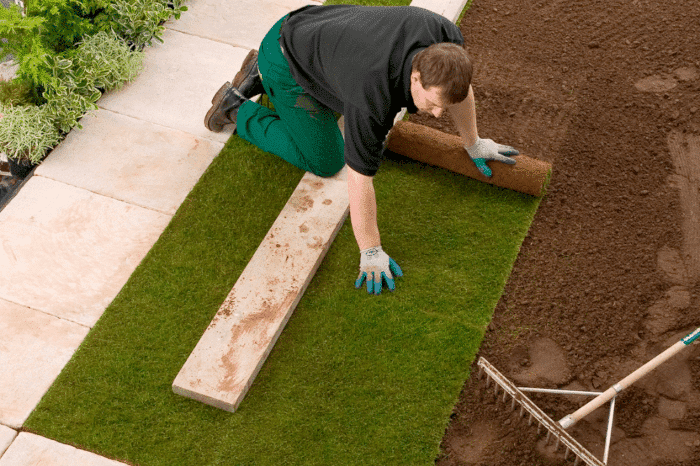
Start along a straight edge, such as a path or fence, and:

  • Butt turves closely together without overlapping
  • Stagger joints in a brickwork pattern
  • Lay turf across slopes, not down them
  • Firm each piece gently to ensure good soil contact

Trim edges neatly around borders, trees, and paths. Any small gaps can be filled with fine topsoil and lightly firmed.

To prevent edges drying out, lightly cover exposed edges with soil. This can be brushed away once the turf has established.

Laying turf against a straight edge - Rolawn how to lay turf guide

Important points to remember​

As outlined above, it is essential to lay your turf as soon as it is delivered.

  • Always walk on planks placed over newly laid turf
  • Never stretch turf to make it fit
  • Do not use a roller on freshly laid turf
  • Keep turf moist at all times during establishment
  • Turf should never be allowed to dry out

Medallion turf can be mown as soon as it needs it, sometimes within the first week, to encourage rooting and lateral growth.

Watch our video on caring for newly laid turf.

How to lay a new lawn by the UK's top experts, Rolawn - growers of Britain's Finest Turf

Step 4: Aftercare - Caring for your new lawn

Early aftercare is critical. Water thoroughly straight after laying and continue to keep the soil moist for the first few weeks.

A healthy lawn depends on the right balance of air, water, nutrients, and light. Ongoing maintenance, such as mowing, feeding, and aeration, helps your lawn stay strong and resilient over time.

Follow our guide to caring for newly laid turf to ensure your new turf establishes quickly for a beautiful and healthy lawn.

Rolawn’s lawn aftercare guides provide detailed advice for ongoing seasonal maintenance.

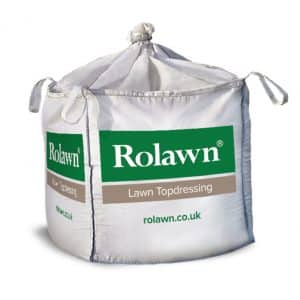
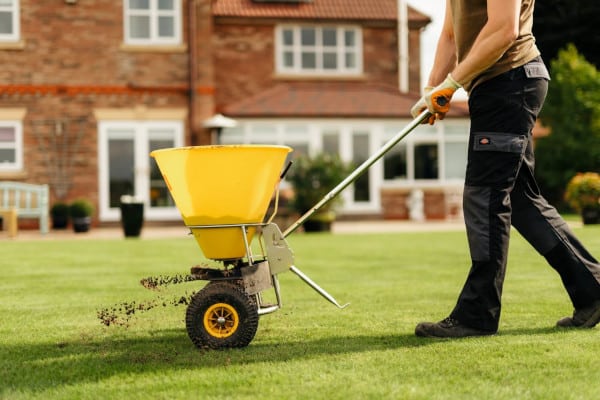
Topdressing a lawn - how to care for your lawn - how to lay turf article

When to seek expert advice

If you are unsure which turf type is best for your garden, or how to prepare challenging ground conditions, expert advice early on can save time and prevent costly mistakes later.

A lawn is a long-term investment, and careful preparation and aftercare matter just as much as the turf itself.

FAQs

Can I lay turf over an existing or old lawn?

No. Turf should always be laid onto properly prepared soil, not over existing grass. Laying turf on an old lawn prevents proper rooting, encourages weeds to grow through, and often leads to uneven settling. Removing the old lawn and preparing a firm, level soil base gives your new turf the best chance of establishing well.

Turf can be laid all year round in the UK, as long as the ground is not frozen or waterlogged. Spring and autumn are often ideal because soil temperatures support rooting and rainfall helps with establishment. Turf can be laid in summer or winter, but these conditions require more careful watering or frost avoidance. See our guide on when to lay turf and seed for more information.

Turf should be laid as soon as possible after delivery. Even turf treated with Profresh® technology is perishable.

Light use is usually possible after a few weeks, once the turf has rooted. Full use should wait until the lawn is well established.

You can usually mow new turf once it has rooted and the grass has reached around 40 to 50mm in height. This is often within 7 to 14 days, depending on weather and growing conditions. Always use a sharp mower, remove only the top third of the grass, and avoid turning the mower sharply on the new lawn.

Medallion® turf can be mown as soon as it needs it, sometimes within the first week, to encourage rooting and lateral growth.

Lawn care reminders to your inbox

You can also sign up to our newsletter to receive free seasonal lawn care advice and reminders of essential maintenance, as well as general horticultural advice and special offers from Rolawn.