Secure online checkout

Select a Free Delivery Date*

ISO 9001 Quality Management

Award-winning customer service

How to improve your soil

Improving your soil

Unfortunately we are not all blessed with perfect, rich, loamy soil in our gardens. 

Clay soils can provide a good, fertile medium for growing as they retain moisture and nutrients, however they will become waterlogged and unworkable when wet. 

Sandy soils are the opposite and require improvement to assist with moisture and nutrient retention.

By regularly working in a soil improver, these problem soils will gradually improve over time in terms of structure and fertility. 

Improving your soil will also replenish nutrients, important for plant growth and as a result, plants will be more resistant to diseases, pests and adverse weather conditions.

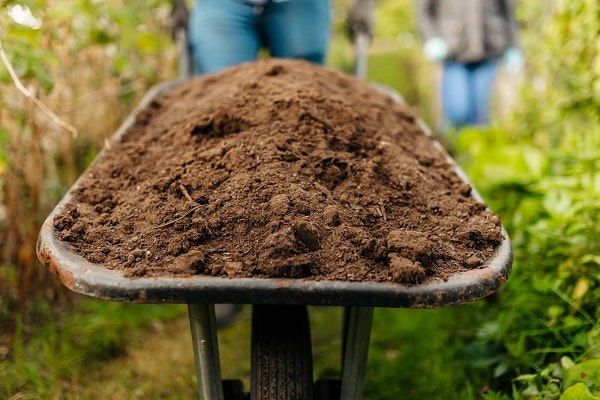
Product Images - Rolawn Vegetable & Fruit Topsoil barrowed up path

When to improve your soil

Soil can be improved at any time of year, however your soil type and what you are growing will determine the best time.

Empty flower or vegetable beds can be improved at the same time as digging over in late autumn or winter, providing the soil isn’t too wet. With heavier, clay soils it may be necessary to wait until late March or April.

Avoid digging or walking on the soil when wet, as this will damage the soil structure further. Working off boards will help prevent this.

How to improve your soil

Unplanted areas should be thoroughly dug over to relieve compaction. With good, well-cultivated soils a light forking over will suffice most years. Clay soils can often have a layer of solid clay underneath the top layer. If this is the case, double digging will be necessary to break this up and prevent a ‘panning’ effect which will hinder drainage.

If conditions allow, clay soils can be dug over in late autumn and left over winter. The frosts will break down large lumps making the soil much more friable in spring.

Spread a thick layer of organic matter over the surface and dig over again using a fork to work it into the surface to a depth of about 200mm.

For clay soils we recommend a layer of soil improver about 75mm deep. Sandy soils require about 30mm, and thin, chalky soils need about 50mm of organic matter adding each year.

Areas which are planted can be lightly forked over, if it’s possible to do so without damaging plant roots. Spread a layer of organic matter over the surface around the plants. Over time it will naturally break down and be worked into the soil by worms and improve the soil beneath. Take care not to smother plants or put the mulch too close to plants which could cause them to rot.

It is recommended gloves should be worn when using soil improvers, and hands washed after use.

What to use as a soil improver

A variety of different materials can be used as soil improvers (also known as soil conditioners):

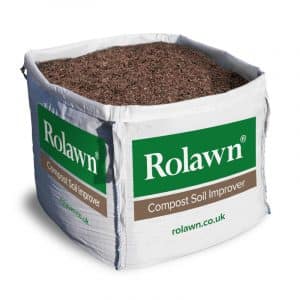
  • Natural, peat free soil improvers such as Rolawn Soil Improver Compost
  • Manure should be well-rotted for at least a year, otherwise it will release nitrogen into the soil too quickly, which can be damaging to some plants.
  • Compost can be made from garden waste, grass cuttings, shredded newspaper and kitchen waste.
  • Leaf mould also makes an excellent soil improver and makes good use of leaves cleared from the lawn, however nutrient levels are quite low.
  • Mulc​h such as Rolawn ProMulch® which is manufactured from a mix of composted organic matter and arboriculture fines.
Important update: Temporary 6.5% surcharge effective 7 April 

At Rolawn, we are committed to maintaining the high standards of quality and service our customers expect, so we want to be open with our customers about a change that will affect pricing from Tuesday 7th April. 

This decision has been taken in response to disruption to energy supplies, which has led to significant increases in wholesale prices, affecting not only fuel and fertiliser but also costs throughout our wider supply chain. As a business that relies heavily on fuel for both transport and operations, these sustained cost pressures have become increasingly difficult to absorb.  

While we have worked hard to mitigate the impact, the scale and pace of recent price increases have now exceeded what we can sustain internally, and we therefore need to recover a proportion of these externally driven increases. 

From Tuesday 7th April, a temporary 6.5% surcharge will apply to all products.  

We know that any increase in price is frustrating, particularly at a time when many businesses and households are already feeling under pressure. That is why we want to be clear that this is not a decision we have made lightly, and not one we wanted to make. It has been introduced solely to help offset unavoidable cost inflation and allow us to continue delivering the quality, reliability and service standards associated with Rolawn. 

We will continue to monitor market conditions closely and will review this surcharge as soon as circumstances allow, providing reasonable notice of any changes. We recognise that any price increase is unwelcome, but this step is necessary to ensure the continuity and reliability of our operations during a period of ongoing uncertainty. 

We remain committed to providing the quality, reliability and service standards you expect from Rolawn, and we truly appreciate your understanding and continued support. 

If you have any questions, please contact our customer support team who will be happy to help.