Secure online checkout

Select a Free Delivery Date*

ISO 9001 Quality Management

Award-winning customer service

Algae and moss in lawns

If your lawn looks thin, damp or patchy, or you have noticed green or dark, slimy growth on the surface, algae or moss may be present. These are usually signs that the grass is under stress rather than the root cause of the problem.

Algae and moss rarely appear on healthy, dense lawns. Instead, they take hold when conditions such as poor drainage, shade, and weak grass growth leave space for them to grow.

The good news is that this is a fixable problem. In most cases, improving the growing conditions will naturally reduce algae and moss while helping your lawn become thicker and more resilient over time.

Why do algae and moss grow in lawns?

Algae and moss are symptoms of underlying conditions that favour their growth over the growth of grass.

The most common causes are:

  • Thin or weak grass coverage
  • Poor drainage or waterlogged soil
  • Shaded areas with limited sunlight
  • Compacted soil restricting airflow
  • Low air circulation

When grass cannot establish strongly, light reaches the soil surface. This creates the ideal environment for moss and algae to develop.

Professional turf growers focus on soil conditions first because even the best turf will struggle in poor ground. Improving the environment is what makes the difference long-term.

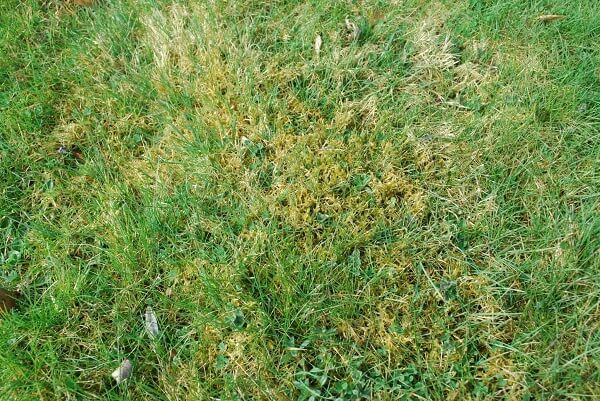
Patch of lawn showing signs or moss growth

How to tell if you have algae or moss

You do not need specialist knowledge to spot the signs. Look for:

  • A dark green or black slimy layer on the soil surface (algae)
  • Soft, green, fuzzy patches forming a mat (moss)
  • Grass that feels thin or sparse
  • Ground that stays wet or “spongy” underfoot

Algae tends to appear as a flat film, especially in very wet areas. Moss forms a thicker layer and is more visible in shaded or poorly drained lawns.

What is the difference between algae and moss?

Understanding the difference helps you treat the issue correctly.

Algae forms a thin, slimy film on the soil surface and is usually dark green to black in colour. It develops where the lawn is very wet, shaded or poorly drained, and it can also appear on nearby hard surfaces such as paths, walls and tree trunks.

Moss is green, soft and cushion-like. It forms a short fuzzy mat in lawns where grass is thin or weak. It has very little root structure, which means it can often be raked or lifted out, but it will return if the damp, shaded conditions remain.
Both indicate that your lawn conditions need improvement, rather than just removal of the growth itself.

How to get rid of algae and moss in your lawn

The most effective approach is to improve the conditions that allowed them to appear. Removing moss or algae alone will only provide short-term results if the underlying issue remains.

  1. Improve drainage

Poor drainage is one of the main causes.

If your lawn regularly holds water, reviewing soil structure will make a noticeable difference.

  1. Increase sunlight

Grass needs light to grow strongly.

  • Trim back overhanging trees or shrubs
  • Reduce dense shadingwhere possible

Even a small increase in light can improve grass recovery and reduce moss growth.

  1. Reduce soil compaction

Compacted soil limits airflow and root development.

  • Aerate to create space for air and water movement
  • Avoid repeated foot traffic in the affected areas

If your lawn feels hard underfoot or water sits on the surface, compaction is likely a factor.

  1. Scarify to remove moss

Once conditions improve, you can remove existing moss:

  • Rake or scarify the lawnto lift out moss
  • Remove debris to expose the soil surface

This allows grass to re-establish and fill the gaps.

  1. Strengthen the grass

A dense lawn naturally prevents moss and algae returning.

If large areas are affected, replacing sections with quality turf can provide a faster, more consistent result.

  1. Apply topdressing

Topdressing helps improve soil structure and drainage.

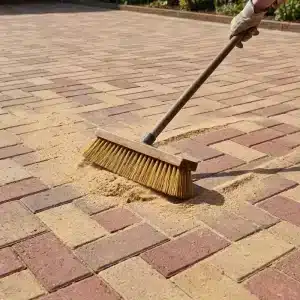
  • Use a sand-soil mix suited to your lawn type
  • Brush into aeration holes

This supports healthier root growth and reduces excess moisture.

Should you use moss or algae killers?

Chemical treatments can reduce algae growth and kill moss, but they are not a complete solution. They may improve the appearance of the lawn in the short term, but if drainage, shade, compaction or weak grass growth are not addressed, the problem is likely to return.

If you choose to use a treatment, always follow the manufacturer’s guidance and combine it with practical lawn improvements such as aeration, scarifying, overseeding and topdressing.

When is the best time to treat moss and algae?

Timing makes a difference.

Spring and autumn are ideal because:

  • Soil is moist but not waterlogged
  • Temperatures support grass growth
  • Overseeding and recovery are more effective

Summer treatments require more watering, while winter is better suited to planning and drainage improvements.

Preventing moss and algae long-term

Once the lawn has recovered, the best prevention is consistent care. Regular aeration, balanced feeding, sensible mowing and avoiding overwatering will all help create stronger grass coverage.

Managing shade is also important. Where possible, allow more light and airflow to reach the lawn by pruning back overhanging plants. A thick, healthy lawn is the best natural defence because it keeps light away from the soil surface, where algae and moss grow.

For more techniques to help you maintain a healthy lawn, explore our other lawn aftercare advice.

Frequently Asked Questions

Why does moss keep coming back in my lawn?

Moss returns when the underlying conditions remain the same. This usually means poor drainage, shade, or compacted soil has not been addressed.

Moss itself does not damage grass, but it takes up space where grass should grow. It is a sign that the lawn is under stress.

Algae can be treated with specific products, but improving drainage and reducing excess moisture is the most effective long-term solution.

Yes. Once moss is removed and conditions improve, grass can recover. Over seeding helps speed up the process.

This is often algae, caused by waterlogged soil and poor drainage.

Yes. Removing moss allows seed to reach the soil and establish properly.

For small areas, over seeding works well. For heavily affected lawns, new turf can provide faster, more consistent results.

Many lawns with moss or algae can be improved with aeration, better drainage, and consistent care. It takes time, but results are reliable when the underlying conditions are corrected.

If your lawn is very thin or continues to struggle, replacing it with high-quality turf, combined with proper preparation, often delivers a more predictable result.

If you are unsure which approach is right for your garden, getting expert advice early can save time and help you achieve a lawn that stays healthy long term.

Important update: Temporary 6.5% surcharge effective 7 April 

At Rolawn, we are committed to maintaining the high standards of quality and service our customers expect, so we want to be open with our customers about a change that will affect pricing from Tuesday 7th April. 

This decision has been taken in response to disruption to energy supplies, which has led to significant increases in wholesale prices, affecting not only fuel and fertiliser but also costs throughout our wider supply chain. As a business that relies heavily on fuel for both transport and operations, these sustained cost pressures have become increasingly difficult to absorb.  

While we have worked hard to mitigate the impact, the scale and pace of recent price increases have now exceeded what we can sustain internally, and we therefore need to recover a proportion of these externally driven increases. 

From Tuesday 7th April, a temporary 6.5% surcharge will apply to all products.  

We know that any increase in price is frustrating, particularly at a time when many businesses and households are already feeling under pressure. That is why we want to be clear that this is not a decision we have made lightly, and not one we wanted to make. It has been introduced solely to help offset unavoidable cost inflation and allow us to continue delivering the quality, reliability and service standards associated with Rolawn. 

We will continue to monitor market conditions closely and will review this surcharge as soon as circumstances allow, providing reasonable notice of any changes. We recognise that any price increase is unwelcome, but this step is necessary to ensure the continuity and reliability of our operations during a period of ongoing uncertainty. 

We remain committed to providing the quality, reliability and service standards you expect from Rolawn, and we truly appreciate your understanding and continued support. 

If you have any questions, please contact our customer support team who will be happy to help.