Secure online checkout

Select a Free Delivery Date*

ISO 9001 Quality Management

Award-winning customer service

How to manage ants and ant hills in lawns

Ants on a lawn can be a real nuisance. Ant nests and hills can disturb and smother grass plants, contributing to an uneven surface and yellowing from root damage.

Ants are very difficult to prevent entirely, but the damage they cause can be rectified with some routine lawn maintenance.

Ants in your lawn

In general, ants are part of a healthy ecosystem, are useful for dispersing seeds, improving soil structure and drainage. In addition, they feed on the larvae of other bugs that can be more detrimental to lawns.

We advocate taking a holistic approach which involves managing their activity rather than killing them. In fact, you could consider their activity a way to naturally aerate your lawn.

Natural methods of managing ants and ant hills

For areas of a lawn that are particularly high or low and which span up to 2 metres, you can patch repair, as follows:

  • Create an H-shaped incision
  • Peel back the turf
  • Add topsoil if the level is too low or remove it if the level is too high
  • Firm down the soil and lay the turf back down
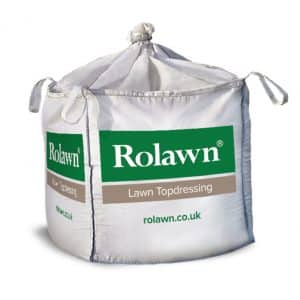
  • Apply topdressing around the incision.
Information & Advice - Ants in turf

Since ants usually appear in summer when we are mowing regularly, it is advisable to brush or rake away the soil when it is dry. This prevents damage to your lawn mower and helps to avoid an excessive build up of earth which can, in time, lead to an uneven lawn surface. An uneven surface can be levelled by topdressing which will not only even out the surface but also assists the general health of the lawn.

Alternative methods of control

If you feel the ant population in your lawn is excessive and that removing them is the only option, then consider a non-chemical solution. Although some chemicals are available, remember that they can be harmful to other wildlife, pets and children. For a particularly bad infestation, where other control methods have failed, it is advisable to seek professional advice.

1. Biological

Ants can be controlled by treating with a biological nematode. The nematodes act as an irritant and the ants are displaced from their colonies. Lawns can be treated from April to October when the soil temperatures are warm enough for the nematodes to be effective. Where ant levels are very high repeat applications may be required to prevent the ants returning to the colony.

2. Physical

Trying to physically dig out an ant nest and relocate its inhabitants is an option but one which will be time consuming and difficult to achieve. To be successful, you would need to dig out an extensive area and ideally locate the queen.

Please also be aware that pouring substances onto your lawn such as ant powder, salt, or even boiling water can scorch it and potentially cause more damage than the ants would have done.

The healthier your lawn is the less likely it is to be affected by disease and pests, so the best advice is to try and maintain a pro-active lawn maintenance routine. 

Further guidance

Further lawn care advice can be found in our Information Centre. You can also sign up for lawn tips to receive regular lawn care advice, news and promotional offers by email which will help you get the best from your lawn.

For more techniques to help you maintain a healthy lawn, explore our other lawn aftercare advice.

Recommended products:

Lawn care reminders to your inbox

You can also sign up to our newsletter to receive free seasonal lawn care advice and reminders of essential maintenance, as well as general horticultural advice and special offers from Rolawn.

Important update: Temporary 6.5% surcharge effective 7 April 

At Rolawn, we are committed to maintaining the high standards of quality and service our customers expect, so we want to be open with our customers about a change that will affect pricing from Tuesday 7th April. 

This decision has been taken in response to disruption to energy supplies, which has led to significant increases in wholesale prices, affecting not only fuel and fertiliser but also costs throughout our wider supply chain. As a business that relies heavily on fuel for both transport and operations, these sustained cost pressures have become increasingly difficult to absorb.  

While we have worked hard to mitigate the impact, the scale and pace of recent price increases have now exceeded what we can sustain internally, and we therefore need to recover a proportion of these externally driven increases. 

From Tuesday 7th April, a temporary 6.5% surcharge will apply to all products.  

We know that any increase in price is frustrating, particularly at a time when many businesses and households are already feeling under pressure. That is why we want to be clear that this is not a decision we have made lightly, and not one we wanted to make. It has been introduced solely to help offset unavoidable cost inflation and allow us to continue delivering the quality, reliability and service standards associated with Rolawn. 

We will continue to monitor market conditions closely and will review this surcharge as soon as circumstances allow, providing reasonable notice of any changes. We recognise that any price increase is unwelcome, but this step is necessary to ensure the continuity and reliability of our operations during a period of ongoing uncertainty. 

We remain committed to providing the quality, reliability and service standards you expect from Rolawn, and we truly appreciate your understanding and continued support. 

If you have any questions, please contact our customer support team who will be happy to help.